
Learning Strategies from the Best
Successful Language Learning Strategies
L
anguage study is also studied. I came across an interesting qualitative study that looked at 67 books about "How I learned a foreign language" and analyzed common strategies and pitfalls. I love these studies because it's like I read 67 books on the subject.
General directions
For beginners, the first important step was generally to have a concrete plan to learn the language and follow the plan regularly. I know first-hand from running this site that commitment is the most difficult issue. This is why we've been looking at mobile games for learning Japanese. Language learning is like putting up a giant brick wall, it's a task that will take some time to complete. But if you think of it as one brick at a time, or one word at a time, then it becomes much more achievable.
"(Good language learners) had tried very hard to find and increase their opportunities to use a foreign language as means of communication....pushing themselves into situations where they had to use a slightly more advanced form of the foreign language to finish the task at hand."
For intermediate learners, the strategies become more involved. Intermediate learners need more intensive study to push ahead. At this point, the language is much more complex. One strategy that doesn't work is reading too analytically - breaking everything down. Intermediate learners need to maximize their exposure to the language.
Strategies for Speaking
For beginners, this meant memorizing sentences and practicing patterns. This is important to start with because you need to be able to practice in order to get better at speaking. You cannot practice if you are not forming any sentences. After you're able to form some sentences, then you can look to increase your vocabulary and form more complex sentences.
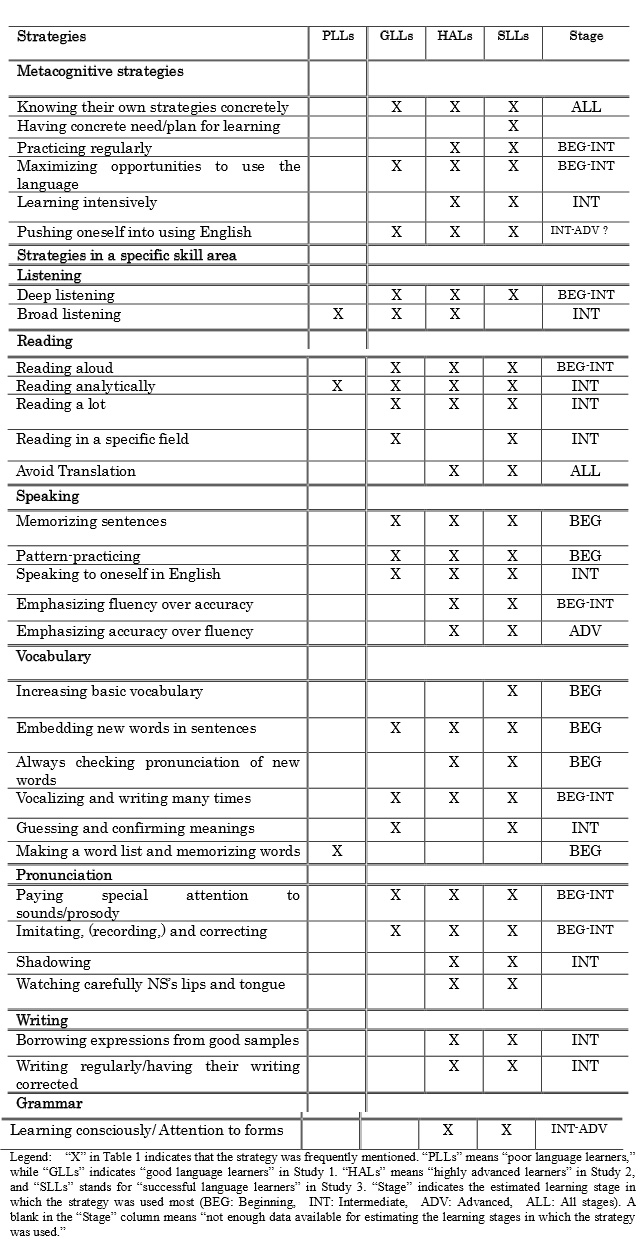
Study by Takeuchi summarizes the most successful language learning strategies.